-
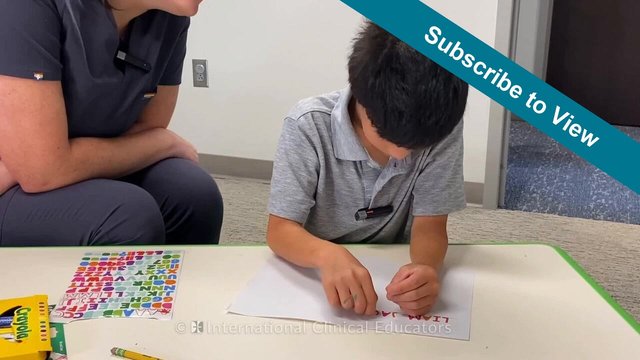
Tablework with Liam Part 4: Stickers
0:00
Seven-year-old Liam works on fine motor and attention skills while spelling his name with stickers.
-
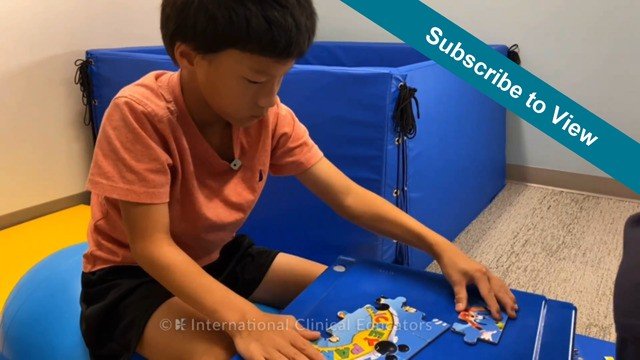
Puzzle Activity with Liam
0:00
Seven-year-old Liam works on his balance and coordination while sitting on a peanut balance ball.
-
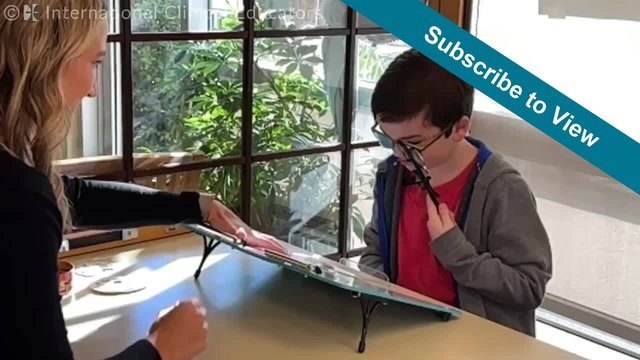
Lucas in Vision Therapy Part 1: Spot it! Visual Scanning Activity
0:00
This 7-year-old pediatric client with amblyopia is receiving vision therapy services from a behavioral optometrist. He uses a +/- lens flipper which makes the image alternately larger and smaller, requiring the eyes to accommodate to focus clearly.
-
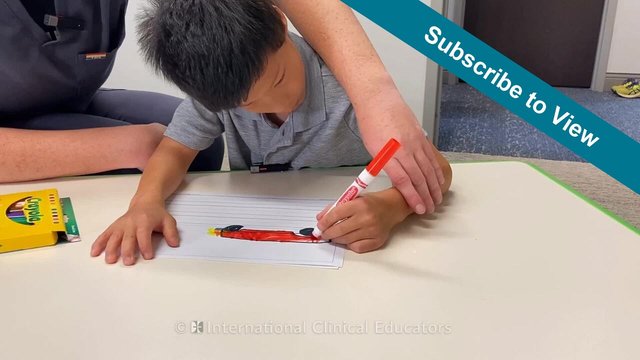
Tablework with Liam Part 1: Drawing
0:00
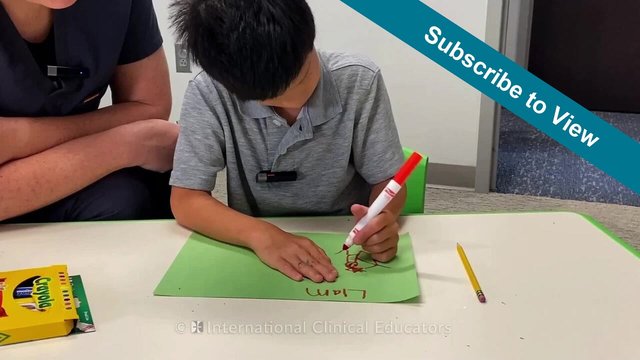
Seven-year-old Liam works on his grip while drawing with cues from the therapist. He writes about his drawing in Part 2.
-
Lucas Part 3: Tangrams Visual Perceptual Activity
0:00
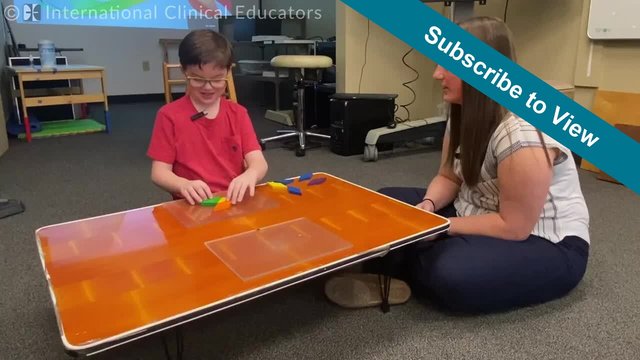
This 7-year-old pediatric client is receiving OT services for his functional needs associated with his diagnosis of ADHD and amblyopia.
-
Bead Activity with Liam
0:00
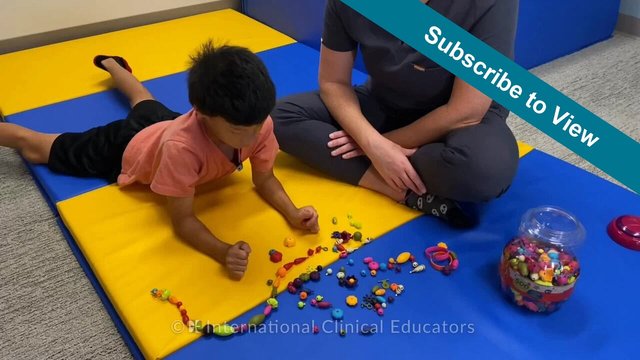
Seven-year-old Liam works on his fine and gross motor skills in prone on the mat during a beading activity.
-
Tablework with Liam Part 3: Copying
0:00
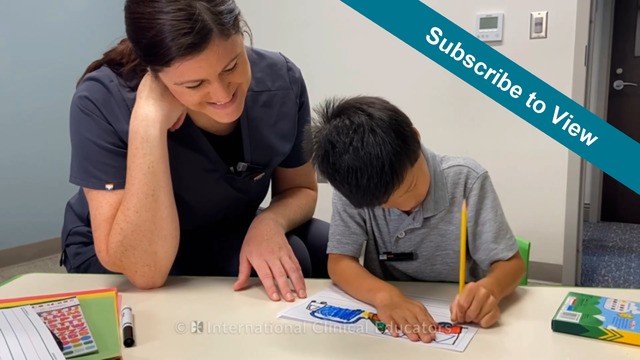
Seven-year-old Liam works on copying shapes provided by the therapist. He also sneaks in a few images of his own.
-
Tablework with Liam Part 2: Writing
0:00
Seven-year-old Liam works on handwriting skills with cues from the therapist. See Part 1 to watch him draw the pictures.
-
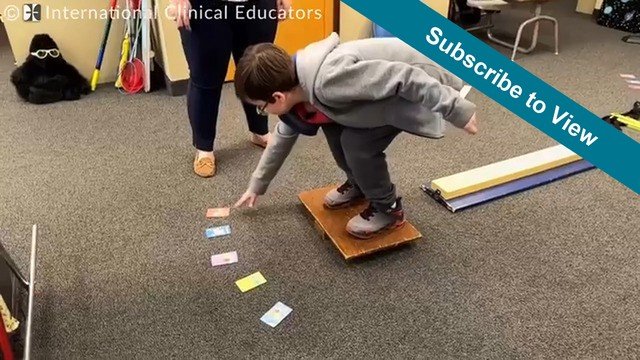
Lucas Part 2: Obstacle Course Activity
0:00
This 7-year-old pediatric client is receiving OT services for his functional needs associated with his diagnosis of ADHD and amblyopia.
-
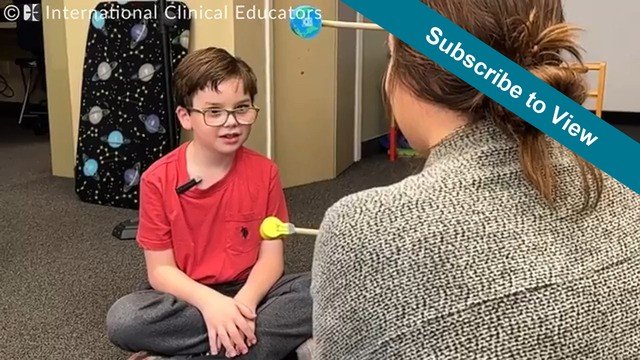
Lucas Part 1: Vision Screen
0:00
This 7-year-old pediatric client has a diagnosis of ADHD and amblyopia. His OT conducts parts of a gross oculomotor screen to assess visual tracking, saccades, peripheral field, and hand-eye coordination.
-
Lucas in Vision Therapy Part 2: Bean Bag Toss Activity
0:00
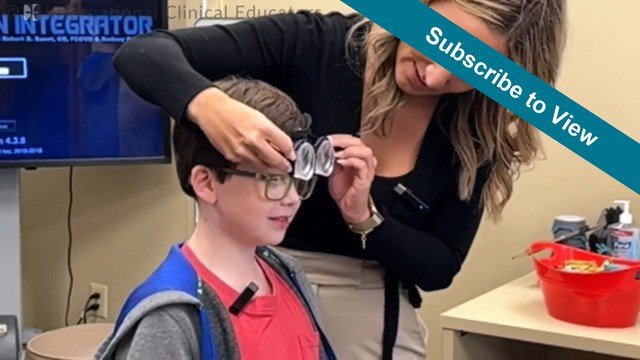
This 7-year-old pediatric client with amblyopia engages in a bean bag toss activity with a behavioral optometrist. His prism glasses shift the image up and encourage his brain to adapt to the shift in gaze in relation to the actual target location.
- Next Page