Radial Fracture, Patient Education 6: Answering Patient Questions
0:00
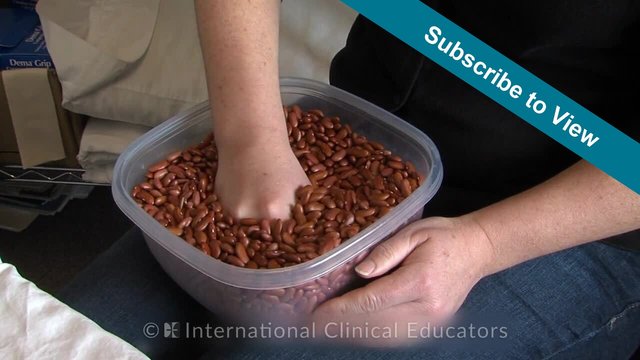
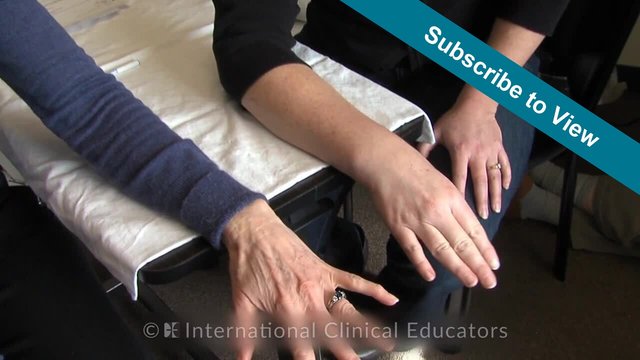
As the initial treatment session ends, the patient asks a common question: “How long will this take?” The therapist explains how end range of motion feels and the importance of continuing active range of motion to minimize loss of hand function.
As the initial treatment session ends, the patient asks a common question: “How long will this take?” The therapist explains how end range of motion feels and the importance of continuing active range of motion to minimize loss of hand function.

Wrist Similar Videos
-
Radial Fracture, Part 4: Measuring Edema of the Hand
0:00
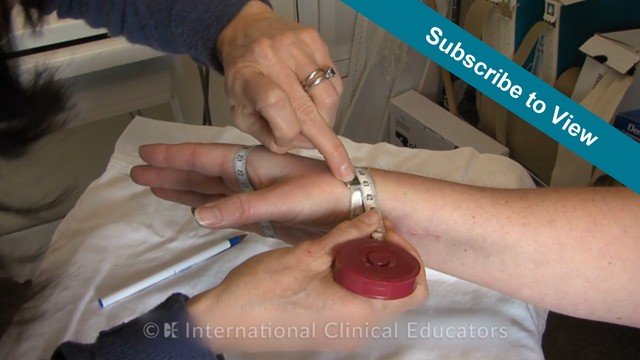
Edema of the hand can impact overall hand function following surgery. The therapist measures the swelling of the hand and compares it to the non-involved hand in order to establish a baseline for treatment. The patient is eight weeks post surgery.
-
Radial Fracture, Patient Education 2: Improving Soft Tissue Elasticity with Heat
0:00
Eight weeks post surgical repair of a distal radial fracture, the therapist begins her treatment instructing the patient how to use heat to prepare soft tissue for a passive range of motion (PROM) home program.
-
Radial Fracture, Patient Education 3: AROM Program
0:00
Eight weeks post surgical repair for a distal radial fracture, the therapist instructs the patient on a home program to increase active range of motion of the fingers, hand and wrist. She explains precautions related to pain and soft tissue tightness